History of Operation Hernia
Introduction
Operation Hernia is the first International Hernia charity set up to relieve suffering from hernias in low- and middle-income countries. A hernia is a debilitating surgical condition, which can increasingly lead to fatal consequences in these countries where access to medical care is limited, as highlighted by the World Health Organisation (WHO).
Since 2005, Operation hernia has continued to establish strong links between local health providers, public and corporate donors and volunteer medical staff worldwide. This has led to high quality hernia treatment services to over 10, 000 patients globally.
In addition to directly providing hernia surgery, Operation hernia continues to support various community projects and training of local doctors. This is to help create a local environment of self-sustainability in the future.
Establishment of Operation Hernia
In 2005, Andrew Kingsnorth and Chris Oppong, surgeons from University Hospitals Plymouth, UK, envisioned an organisation that could bring affordable mesh repair to countries where there was a high incidence and complications from hernias. This was made possible with the support from the European Hernia Society and the Plymouth-Takoradi link. Andrew Kingsnorth has since retired from Operation Hernia.
Our first mission in 2005 was to Takoradi, Western Region of Ghana. This subsequently led to establishment of a Hernia Treatment Centre in 2006 with the support locally from the Takoradi Hospital teams, The British High Commission in Ghana and CNR (Canadian Natural Resources).
This support enabled the design and conversion of redundant wards into a purpose-built Hernia Centre comprising a reception, operating theatre and recovery wards. It also helped to fund overseas training of 6 nurses from Takoradi, Ghana to Plymouth, United Kingdom and sourcing of vital equipment.
The centre has continued to provide hernia surgery, with regular visits from overseas volunteer medical teams globally, who can often provide surgery to 50 – 100 patients per week depending on the complexity of the cases. In 2019, the Hernia Centre was relocated to Essikado Hospital to continue the increasing demand for this service.
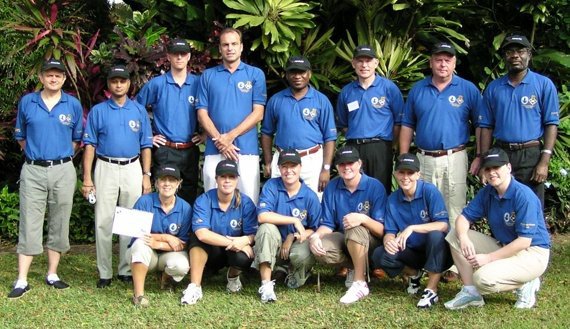
Operation Hernia Team 2005
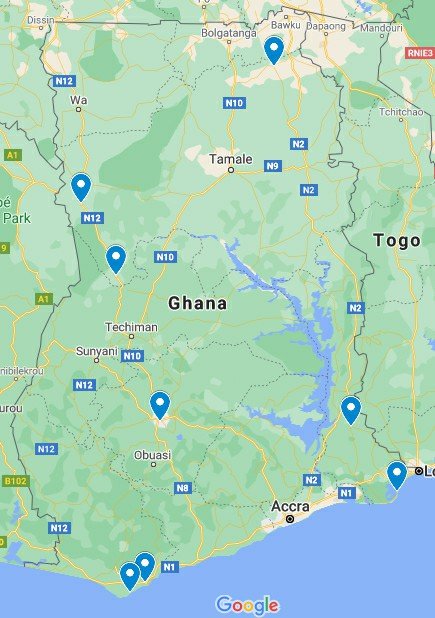
Map of Visits to Ghana
Operation Hernia Worldwide
Operation hernia has successfully completed missions in several African nations, South America, Southern Asia and Mongolia.
Ghana was one of the first established links and continues to remains a recipient of Operation hernia missions. Surgeons, anaesthetists and nurses from various nations, under the guidance of Operation hernia and in collaboration with the local medical teams, successfully deliver regular care to 9 hospitals across various regions. They are Takoradi hospital, Ghana Ports & Harbour Authority Hospitals (GPHA), Dixcove hospital, Kwesimintsim hospital, Cape Coast Teaching hospital, Ho Teaching hospital, Keta hospital, Richard Novati Catholic hospital, Bole hospital and the Baptist Medical Centre, Nalerigu. In addition, previous teams have worked with Okomfo Anokye Teaching hospitals, Wenchi hospitals and Effiah Nkwanta hospital.
(You can view where we have been in Ghana, and other countries – on our mission map here.)
In addition, regular teams provide missions to Rwanda, with close collaboration with the Rwanda Legacy of Hope charity and Surgeons for Africa (Medical charity registered in Germany). Further regular missions are carried out in Uganda, Botswana and India.
Affordable Mesh
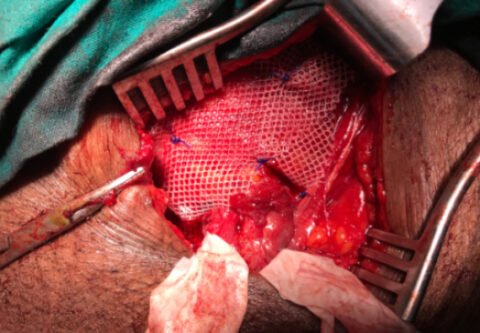
Operation hernia adopted the technique of using a sterilised polypropylene mosquito to repair inguinal hernias in income-poor countries in Africa, South America and Asia.This technique was innovated by Dr Brahmma Reddy (rural surgeon in India) and popularised by Dr Ravindranath Tongaonkar (Surgeon in India), who was introduced to it in 1996.
The low cost of this mesh along with easier sterilisation at lower temperatures, and comparable surgical outcomes made this a safe and affordable option, during early period of high cost of commercial mesh and limited sterilisation facilities locally.