Why hernias?
Inguinal hernia repair and Caesarean section are the two most commonly occurring operations in Africa. Trained surgeons are few, distances between hospitals are large and strangulated hernia is the most common cause of intestinal obstruction.
Numerous deaths and cases of permanent disability occur because patients with inguinal hernias requiring elective or urgent surgery are not properly cared for, or they do not actually reach hospital.
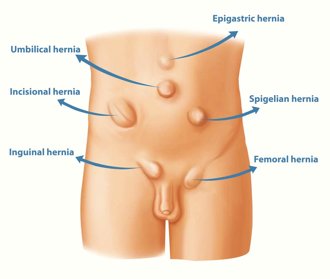
Types of Hernia
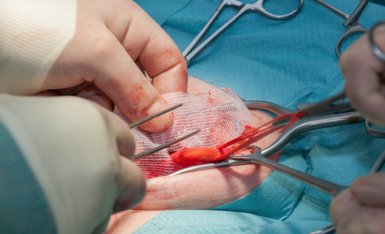
Operating Using Mesh
Mesh vs no-mesh?
Most mesh repairs in high income countries are done as a tension free mesh repair technique, with similar results in non-mesh repairs only achieved in very specialist centres. The lack of surgeons in combination with the cost of mesh has hampered the ability of the standardised mesh hernia repair to be easily available to patients in low to middle income countries.
Mosquito Nets – Low-Cost Mesh Option
Operation hernia adopted the technique of using a sterilized polypropylene mosquito to repair inguinal hernias in income-poor countries in Africa, South America and Asia.
This technique was innovated by Dr Brahmma Reddy (rural surgeon in India) and popularised by Dr Ravindranath Tongaonkar (Surgeon in India), who was introduced to it in 1996.
Mosquito nets are composed of a copolymer of polypropylene, and have several studies that confirm that they are equivalent to commercial meshes, in terms of infection rates, recurrence, rejection or chronic pain.
The low cost of the mesh along with easier sterilisation at lower temperatures, made this affordable, with studies estimating the cost to be 1/1000 the price of commercial mesh.
What Hernias Do We Fix and Who Do We Fix Them in?
Majority of the hernias that are operated upon are inguinal hernias. The teams also on occasion operate on umbilical, ventral or incisional hernias.
Most of the cases are done on adults, with some paediatric cases undertaken.
The complexity of the cases and the age of the patients that are operated on is dependent on the facilities at the local hospital, expertise of the surgical and the anaesthetic team that are visiting on the mission.
Quality and Teaching
The quality of the surgery is maintained with a senior Consultant led operating and with intense supervising of local and overseas trainee on missions. Data is captured locally and any follow up carried out by local teams to assess for complications and outcomes.
In addition, teaching is done also by videos, online platforms and courses (see teaching session)
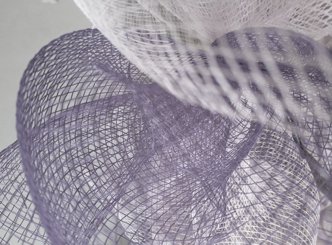
Meshes